






Keynote Speakers
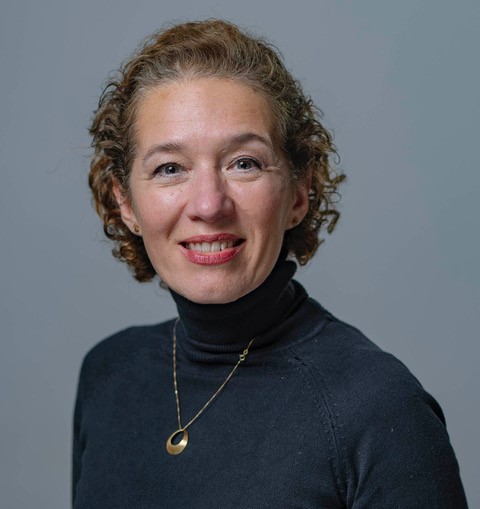
Prof. Aline Villavicencio
University of Exeter & University of Sheffield (UK)
Visiting Professor, Federal University of Rio Grande do Norte (Brazil)
Advancing Multilingual and Multimodal Idiomaticity Representation: Investigating LLMs for AI-Based Support for Mental Health Communication
The capabilities of large language models have gone from strength to strength, and their use is now pervasive in daily life. However, these models still face a serious challenge when dealing with languages outside of English and a few other higher resourced languages. Part of this talk will address some of the challenges in recent models, looking at strategies for language and vocabulary adaptation for improving representation of a variety of languages. Another challenge comes from specialised and figurative language, and I'll discuss some of the techniques for handling non-literal language, such as terminology, idioms (make ends meet) and noun compounds (loan shark). These are an integral part of the mental lexicon of native speakers often used to express complex ideas and feelings in a more metaphorical or euphemistic way, but still represents a real challenge for current LLMs. In this talk, I will present an overview of the identification and multilingual modelling of idiomaticity focusing on mental health communications. I will concentrate on what models seem to incorporate of idiomaticity, and present an initiative to construct a multilingual and multimodal idiomatic dataset.
Aline Villavicencio is a Professor of Natural Language Processing, at the Department of Computer Science, University of Exeter, and affiliated to the Department of Computer Science, University of Sheffield (UK). She is a member of the ELLIS Society and a Visiting Professor at the Federal University of Rio Grande do Norte (Brazil). She is also a former director of the Institute of Data Science and Artificial Intelligence, University of Exeter, and was a Fellowship at the Alan Turing Institute (2024–2026).
Before these, she held academic positions in the Federal University of Rio Grande do Sul, Brazil (between 2005 and 2021) and in the University of Essex, UK (between 2017–2019).
Aline received a PhD (2003) and MPhil (1997) from the University of Cambridge (UK) and held postdoctoral positions at the University of Cambridge and University of Essex (UK). She was a Visiting Scholar at MIT (USA, 2011–2012 and 2014–2015), at the École Normale Supérieure (France, 2014), an Erasmus-Mundus Visiting Scholar at Saarland University (Germany in 2012/2013) and a Visiting Lecturer at the University of Bath (UK, 2006–2009). She held a Research Fellowship from the Brazilian National Council for Scientific and Technological Development (Brazil, 2009–2017).
She is a member of the editorial board of Computational Linguistics, TACL and of JNLE. She was the General Chair of EACL 2026 and PROPOR (2018), PC Co-Chair of ACL 2022, CoNLL 2019, Senior Area Chair for EMNLP 2025, ACL 2020 and ACL 2019 among others. She was also a member of the NAACL board, SIGLEX board and of the program committees of various *ACL and AI conferences, and has co-chaired several *ACL workshops on Cognitive Aspects of Computational Language Acquisition and on Multiword Expressions. Her research interests include multiword expressions and idiomatic and specialised language, cognitively motivated NLP, and she has co-edited special issues and books dedicated to these topics.

Dr. Martin Krallinger
Barcelona Supercomputing Center
Clinical Language Technology Resources and Multilingual NLP Systems: Development and Evaluation
Biomedical natural language processing has advanced rapidly with the emergence of large language models (LLMs), creating new opportunities to extract and leverage information from unstructured data sources such as clinical records, scientific literature, and social media. Despite this progress, significant challenges remain, particularly in the creation of high-quality annotated corpora, the development of reliable named entity recognition systems, and the establishment of robust evaluation frameworks.
This talk will highlight recent strategies in biomedical and clinical NLP, with a focus on multilingual resources that extend capabilities beyond English to other languages such as Spanish, Italian, Dutch, Romanian, and Swedish. It will present practical applications in areas including rare diseases, cardiology, and predictive modeling, along with an overview of community-driven shared tasks and evaluation initiatives that are shaping progress in the field.
Martin Krallinger is head of the NLP for Biomedical Information Analysis (NLP4BIA) team at the Barcelona Supercomputing Center (BSC) and an expert in biomedical and clinical language technology systems. His work focuses on developing language technologies for health-related applications such as rare diseases, drug safety, biomaterials, cardiovascular diseases, toxicology, or occupational health, with particular interest in the generation and evaluation of multilingual solutions.
He is especially known for advancing benchmarking and evaluation of biomedical NLP and LLM-based tools, organizing international community challenges like BioCreative, BioASQ, BIONLP-ST, IberEval, IberLEF, biomedical WMT, and eHealth CLEF. His team has made major contributions to high-quality annotated datasets, medical corpora, and annotation protocols, which support building state-of-the-art transformer-based NLP systems using BSC's computational resources.